Learning through play
Why play is how young children actually learn
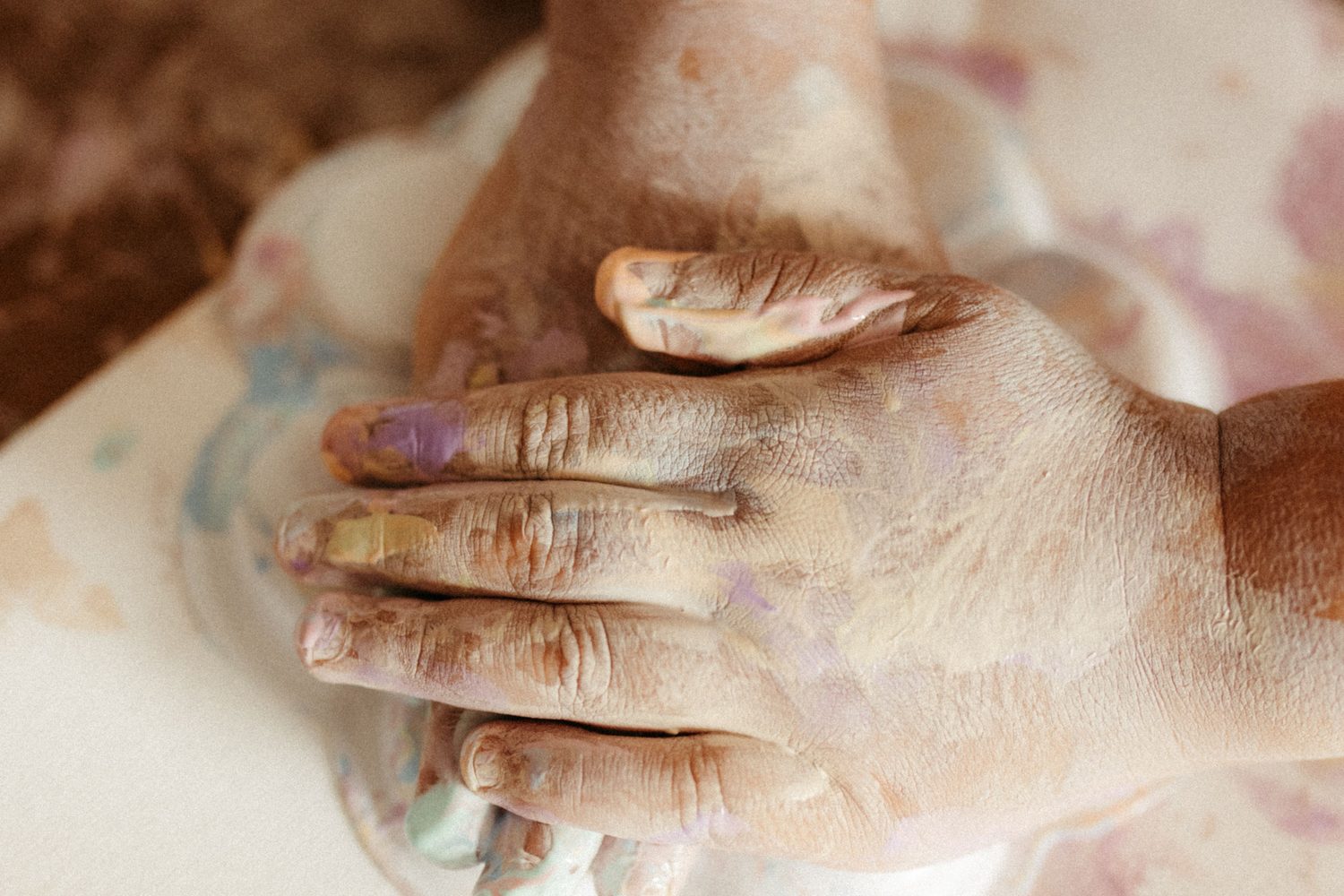
We tend to treat play as the fun bit that happens once the real learning is done. For a young child, that has it backwards. Play is not the reward at the end of learning. It is the way learning happens in the first place. When a three year old stacks blocks, floods the garden with a watering can or turns a box into a spaceship, they are running experiments on how the world works, and their brain is building the machinery it will use for everything that comes later.
The research on this is strong enough that the American Academy of Pediatrics now formally advises doctors to encourage play, treating it as essential to healthy development rather than a nice-to-have. So if the sight of your child “just playing” ever nags at you, let it go. That is the work.
Play is not the opposite of learning
Part of the confusion is that play does not look like learning. There is no worksheet, no right answer, no gold star. But underneath the mess, a lot is going on.
When children play, especially with other people, they practise the skills psychologists call executive function: holding an idea in mind, resisting the urge to grab, switching plans when the first one fails, and staying with something long enough to see it through. These are the mental control skills that sit underneath reading, maths, friendships and self-control. A landmark review in the journal Science found that these skills can genuinely be strengthened in early childhood through the right kinds of activity, and that they matter for school success at least as much as raw intelligence does.
Play is one of the most natural ways to build them. Every game of pretend asks a child to hold a role in mind. Every turn-taking game asks them to wait. Every collapsed block tower asks them to try a different approach. That is executive function training, dressed up as fun.
Free play and guided play, and where the magic is
Not all play is the same, and the distinction is useful for parents.
Free play is entirely child-led. They decide what happens and where it goes, and you stay out of the way. It is wonderful, and children need plenty of it for creativity, independence and simply learning to run their own show.
Guided play sits one step along. An adult sets up an activity with a gentle learning goal in mind, then follows the child’s lead inside it, adding a question here, a small challenge there. You are not directing. You are playing alongside and nudging.
That middle ground turns out to be a sweet spot. A large 2022 review from the University of Cambridge pulled together 39 studies covering around 3,800 children and found that guided play was as effective as traditional adult-led instruction across the board, and better than it in some areas, notably early maths and the ability to switch flexibly between tasks. Just as importantly, there was no area where guided play came off worse. Children learned at least as much, and they did it through something they actually enjoyed.
You do not have to choose between a child having fun and a child learning. Done well, they are the same activity.
What guided play looks like at home
You do not need training or special toys to do this. You need a starting point and a light touch. A few examples of the same activity, played guided rather than left entirely alone:
- Building blocks. Instead of only watching, wonder aloud: “I wonder if we can make it taller than the couch.” Now there is a goal, a bit of maths, and a reason to problem-solve when it wobbles.
- Water play. Add a question: “Which of these do you think will float?” Suddenly it is a science experiment they are running, with you as the curious sidekick.
- Pretend shop. Hand over some buttons as coins. Counting, sharing, taking turns and early number sense, all inside a game they think is entirely their idea.
- Sorting the odds and ends. “Can we put all the round ones here and all the pointy ones there?” is early categorising, which is the seed of a lot of later thinking.
The skill is not in taking over. It is in asking the good question, then getting out of the way again. For more of this in practice, our screen-free activities for 3 year olds are built to be played exactly this way, and the same thinking runs through raising a curious child.
The head-start myth
There is a persistent worry that play-based early years leave children behind, and that a child who spends the year before school playing will trail one who spent it on formal drills. The evidence does not support it. The Cambridge review found guided play matched formal instruction and beat it in places, and the executive-function skills that play builds are among the best predictors of how a child goes at school.
A child who has spent their early years playing well is not behind. They arrive with attention, curiosity, patience and the nerve to have a go, which are the exact foundations a classroom is built to grow. These are also the human strengths that will matter most in an AI world, the ones a screen cannot hand a child and a machine cannot replace.
Play with a little more purpose
If guided play is the sweet spot, the catch is that thinking up the right activity, with the right gentle nudge, every single day, is genuinely tiring. That is the gap Mini Brains Play fills. Each day it hands you one planned, screen-free activity for three to five year olds, chosen to build two or three of the human strengths through play, with the learning already woven in so you can just enjoy the game. It is guided play, without you having to be the one who plans it. You can see how it works and what is included whenever you like.
Play and learning questions parents ask
Is play-based learning actually effective? Yes. A large 2022 review of 39 studies found guided play was as effective as traditional instruction, and more effective in areas like early maths and flexible thinking. Major bodies including the American Academy of Pediatrics treat play as essential to healthy development.
What is the difference between free play and guided play? Free play is entirely child-led with no set goal. Guided play is child-led inside an activity a parent or educator has set up with a gentle learning aim, adding light questions and challenges along the way. Both matter. Guided play is especially good for building specific skills.
Does my child learn more from play or from formal lessons at this age? For three to five year olds, the evidence suggests they learn at least as much through well-supported play as through formal instruction, and they enjoy it more. Play also builds the executive-function and self-regulation skills that formal lessons rely on.
How do I make play more educational without ruining the fun? Keep it playful and follow your child’s lead. Add one good question or a small challenge, then step back. The moment it feels like a lesson, ease off. The fun is not a distraction from the learning. It is part of what makes the learning stick.